Patching nail pops and hairline cracks in Riverside homes
The nail pop looks like a cosmetic bump. Underneath it is a fastener that has lost its grip on the stud, and filling the dimple alone sends it back within a season, so the notes at drywall contractor riverside raahi set out the fastener repair first for drywall work in Riverside, CA.
Why the heads rise
Many Riverside tract houses from the 1960s and 70s were hung with nails, not screws, on lumber that was still drying when the board went up. As the stud shrank and twisted, the half inch board slid outward over the nail head and pushed a small circle through the paint. Light from a side window shows it first, long before a hand can feel it.
The fix starts with the fastener
A crew pulls the loose nail or drives a screw an inch or two above and below it, setting each one just under the paper without tearing through it. The old nail is then set flat. Skipping the screws is the usual reason a repair reopens, because the board still floats and the first coat of mud cracks along the same ring.
Filling the dimples
Setting compound goes over the screw heads in two thin passes, with all purpose compound as the final skim. Setting compound is mixed from powder and cures chemically, so it does not shrink the way premixed mud does. Each pass is feathered several inches past the edge so no ridge catches the light.
Hairline cracks near doors and corners
Small cracks run diagonally from the corners of doors and windows, where the frame concentrates stress when the house flexes. The Inland Empire sits among active faults, and minor shaking over the years leaves hairlines that no one remembers causing. A crack is opened slightly with a utility knife, bridged with paper tape or mesh tape, and covered with joint compound in coats that widen each time.
When the crack keeps coming back
A crack that reopens along the same line every year usually means movement behind the wall, not a bad finish. Flexible paintable caulk can take the place of rigid compound at a corner that moves. A crack that grows wide, steps across the wall or runs through the framing is a structural question for someone other than a drywall crew, and the repair waits for that answer.
Sanding, primer and paint
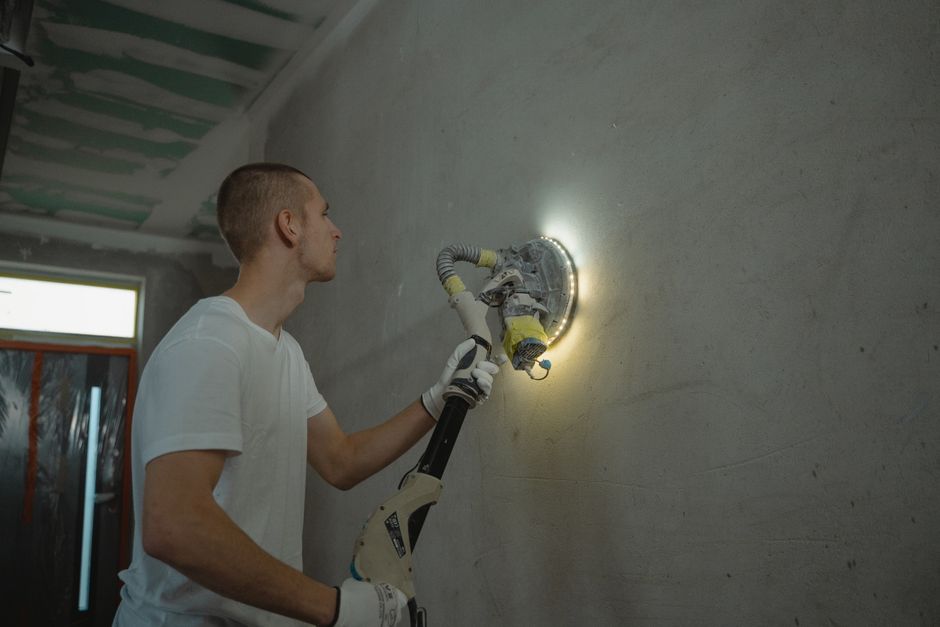
Sanding is done with a light touch and a work lamp held low against the wall, because a patch that disappears under the room light often shows under afternoon sun from a west facing window. Primer goes on the patched area before paint. Raw compound soaks up paint differently from the board around it, and a dull flat patch is what comes of skipping that step. A final check from across the room, with the lamp off, tells the crew whether the repair is finished.